01
Project thinking
Connect safety, cost, schedule, quality, sustainability, and workforce needs rather than treating construction decisions as isolated exercises.
TEACHING & LEARNING
Students should leave a course able to make sound professional decisions, explain why those decisions matter, and apply technical knowledge under realistic project constraints.
INSTRUCTOR-DEVELOPED TEACHING RESOURCES · TCM 2430
Explore Dr. Tommy Tafazzoli’s lecture materials, from OSHA and hazard analysis to safety across construction operations. A structured weekly pathway connects classroom discussion with decisions made on a jobsite.
Explore the course materials ↗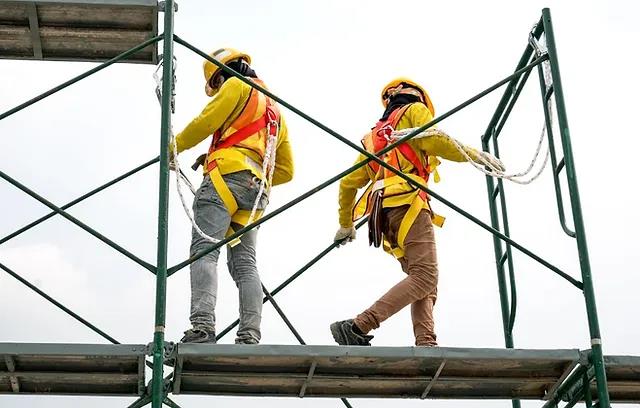
INSTRUCTOR-DEVELOPED TEACHING RESOURCES · TCM 5330
Explore Dr. Tommy Tafazzoli’s lectures on sustainable design, certification, resource efficiency, healthy indoor environments, and the communities buildings serve.
Explore Green Construction materials ↗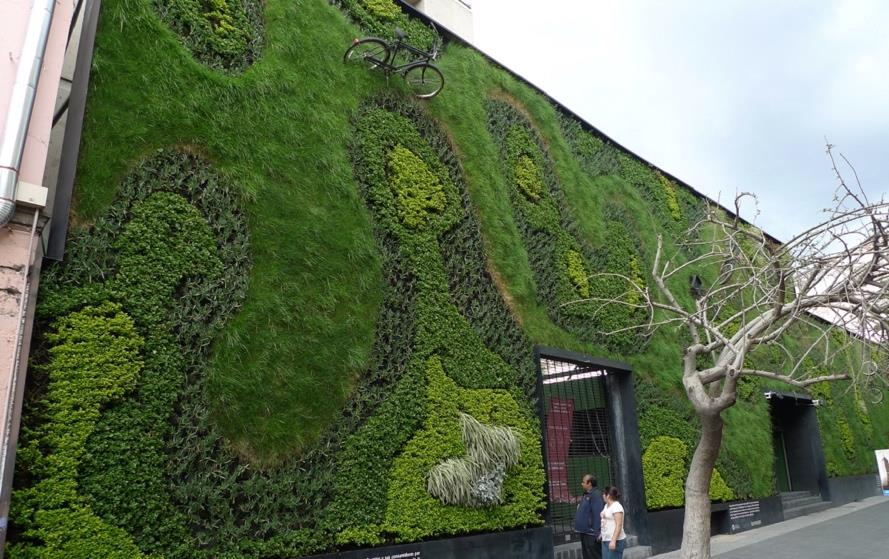
Georgia Southern, Fall 2023–Summer 2026. Ratings are the unweighted mean of the 27 section averages in the supplied core narrative; enrollments are course registrations.
LEARNING BEYOND THE CLASSROOM
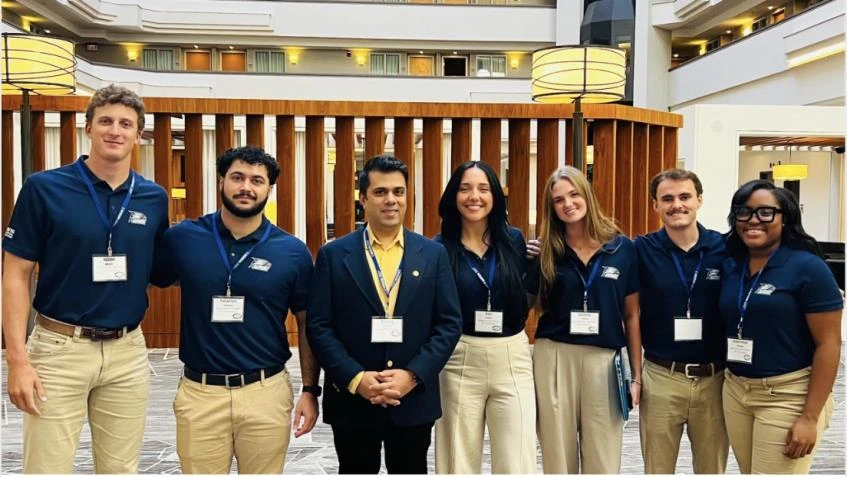
ASC competition coaching gives students a setting to connect planning, estimating, teamwork, and presentation under realistic project constraints.
Students & mentoring ↗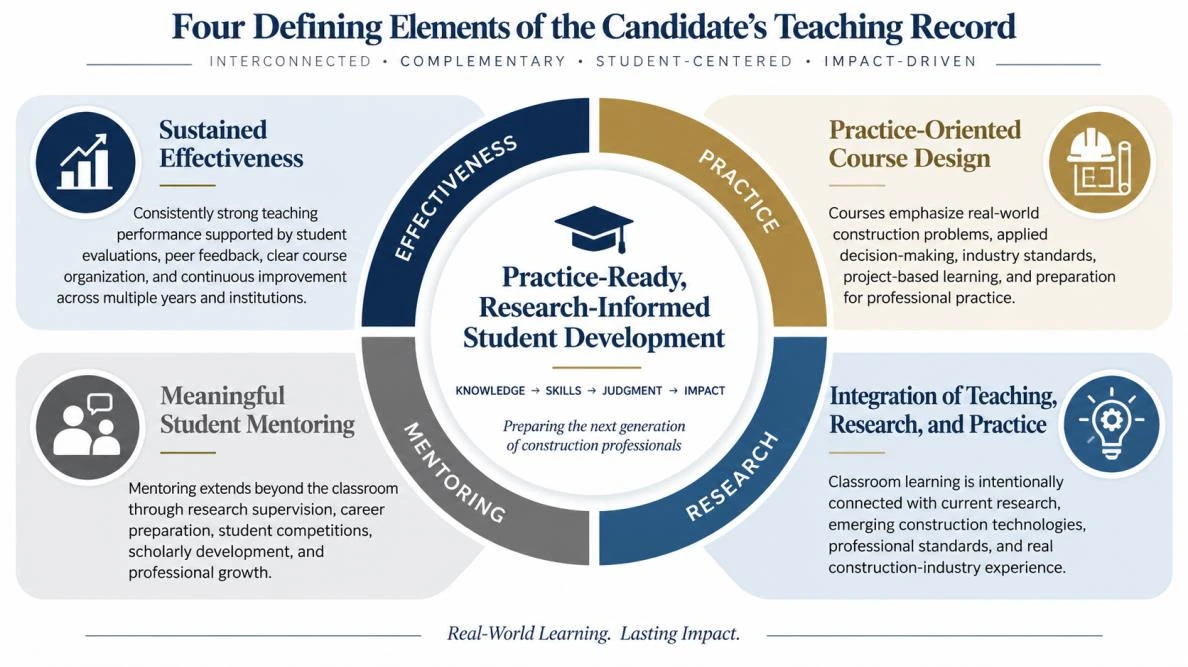
TEACHING PHILOSOPHY
01
Connect safety, cost, schedule, quality, sustainability, and workforce needs rather than treating construction decisions as isolated exercises.
02
Use realistic assignments, professional tools, standards, and project scenarios to build confidence for internships and employment.
03
Work with real cases, jobsite examples, project safety plans, scheduling exercises, and industry-informed competition problems.
04
Treat safety, environmental responsibility, ethical conduct, and communication as integral parts of technical competence.
05
Connect LEED and building-performance concepts with emerging construction technologies and current research.
06
Use recurring assessments, instructional videos, clear weekly course organization, and student feedback to support steady engagement.
COURSES & CURRICULUM
Georgia Southern
Accident cases, OSHA requirements, job-hazard analysis, and project safety planning.
Georgia Southern
LEED concepts, building performance, sustainability decisions, and realistic project constraints.
Georgia Southern
Code requirements and their relationship to construction practice.
Georgia Southern
Literature, research methods, analysis, and scholarly dissemination.
Washington State
Project controls, construction operations, equipment, and schedule-driven decision-making.
Washington State · Course development
Two developed courses connecting project delivery, documentation, contracts, and professional coordination.
EVIDENCE & CONTINUOUS IMPROVEMENT
Across the supplied evaluations, recurring strengths include course organization, detailed lecture materials, instructional videos, alignment between teaching and assessment, and practical assignments.
Feedback guides improvements to demonstrations, interaction, and applied learning. Inclusive teaching emphasizes clear expectations, accessible materials, varied ways to engage, and responsiveness to cultural and language differences.
Teaching and Student Success were rated “Exceeds Expectations” in both the 2024 and 2025 Georgia Southern annual evaluations.
INDUSTRY TO CLASSROOM
Heavy-civil scheduling and competitive-bid development bring practical context to project planning, estimating, coordination, and constructability discussions.
Highway and tunnel field engineering connects classroom decisions with project execution, safety, documentation, and infrastructure performance.
LEARNING BEYOND THE COURSE
Graduate publication, undergraduate research, ASC competition preparation, and career mentoring extend learning beyond the classroom. The next teaching agenda builds on these practices through more demonstrations, emerging technologies, applied exercises, and carefully supported research opportunities.