Can a mill’s operating data help anticipate wastewater quality? This video explains a comparison of five machine-learning approaches for predicting effluent biochemical oxygen demand (BOD), using 1,033 daily records from a full-scale European pulp and paper mill.
Key findings from the paper
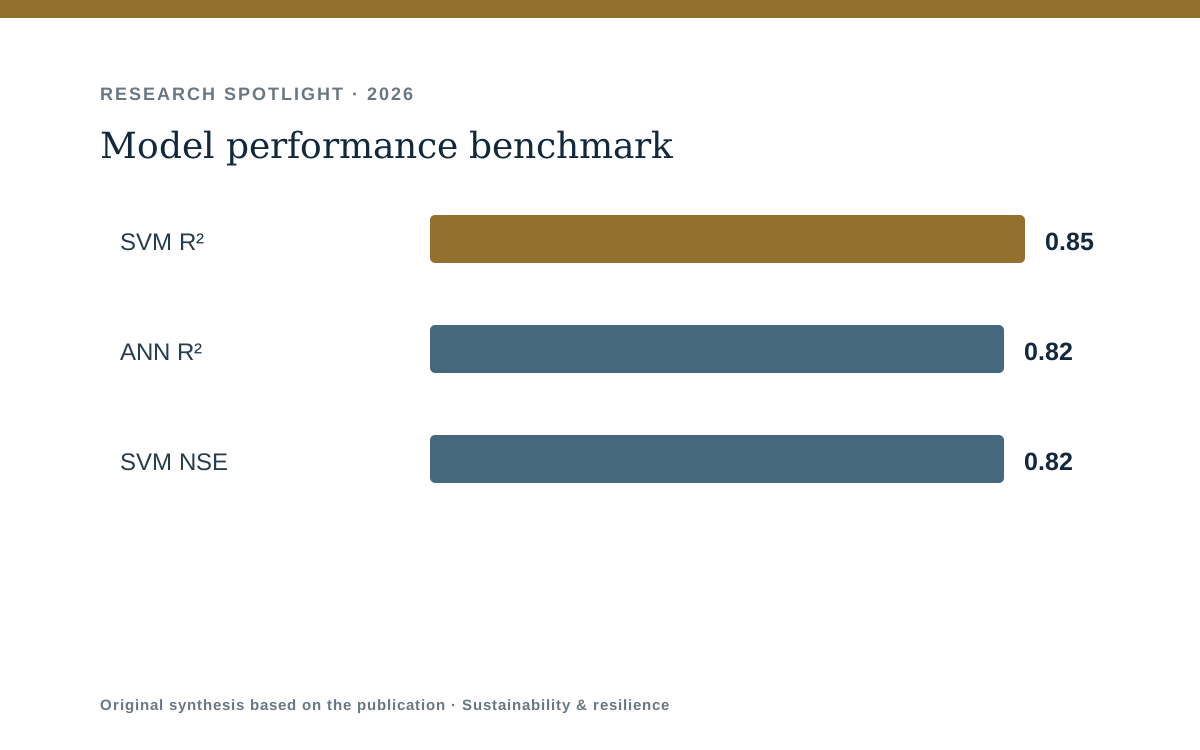
The support-vector-machine model achieved the strongest predictive performance: R² = 0.85, NSE = 0.82, and RMSE = 5.5 mg/L.
The neural network combined competitive accuracy (R² = 0.82; RMSE = 6.8 mg/L) with the fastest runtime. Genetic programming provided interpretable equations, while tree-based models offered operational transparency.
The study benchmarks retrospective predictions from January 2020–October 2022. Real-time process control remains a future application requiring sensor integration; the models include laboratory-measured influent BOD.
Pulp and paper mills collect extensive operating data, but effluent biochemical oxygen demand is still slow to measure and difficult to anticipate. This study tested which common machine-learning approach offered the most useful balance of accuracy, speed, and interpretability.
What we did
Five models were benchmarked with 1,033 daily records from a full-scale European mill collected from January 2020 through October 2022. Inputs covered flow, influent solids and BOD, temperature, aeration, hydraulic retention time, and chemical dosing.
What we found
The support-vector-machine model performed best, with R² = 0.85, NSE = 0.82, and RMSE = 5.5 mg/L.
The neural network was competitive (R² = 0.82; RMSE = 6.8 mg/L) and had the fastest runtime.
Genetic programming produced interpretable equations, while trees and random forests offered operational transparency.
Why it matters
The comparison clarifies which model characteristics matter for monitoring, compliance, and future real-time process control. It also shows how routinely collected plant data can support practical environmental decisions. Read together, the question, method, and findings show how this publication fits within Tafazzoli’s broader program of connecting built-environment evidence with practical decisions. The page intentionally separates documented results from interpretation and directs readers to the complete paper for methodological detail. The study also illustrates a recurring principle across this research portfolio: a useful result must be understood in its original setting before it is transferred to another project, organization, population, or policy context.
Model performance benchmark. This original synthesis graphic is based on the study’s documented question, method, or principal contribution; consult the paper for complete figures, labels, units, and uncertainty.
Original website synthesis based on the cited publication.
AI-driven deployable water quality management: Benchmarking effluent BOD prediction at a European pulp and paper mill
Published · 2026 · Journal article
Naeijian, F., Arefinia, A., Zaki, M. T., Orner, K. D., Tafazzoli, M., & Rowles, L. S. (2026). AI-driven deployable water quality management: Benchmarking effluent BOD prediction at a European pulp and paper mill. ACS Engineering Au, 6(1), 170–184. https://doi.org/10.1021/acsengineeringau.5c00088
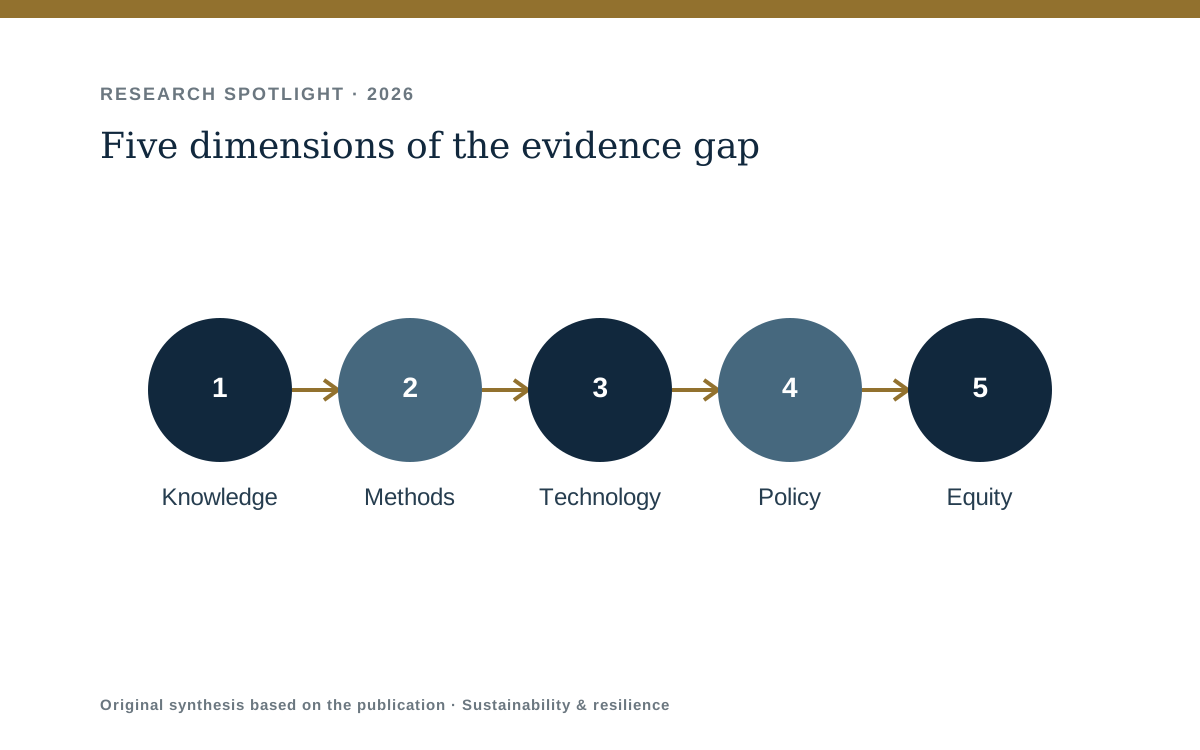
The resulting framework gives researchers and policymakers a common structure for setting priorities, harmonizing measurements, and designing more equitable indoor-air-quality programs.