How Construction Professionals Want Fatigue Monitored
The results show that technical capability alone is not enough.
Safety & human performance
Read spotlightRESEARCH SPOTLIGHT · 2022
The results help safety leaders target the organizational disconnect behind many procedures.
Safety programs depend on shared understanding, yet managers and workers may judge the same safety conditions very differently. The study asked where those differences occur and which responses both groups consider useful.
A U.S. survey of 133 construction professionals used 33 paired questions covering safety knowledge, culture and commitment, performance, and support and communication. Managers and workers assessed both their own group and their counterparts.
The results help safety leaders target the organizational disconnect behind many procedures. Training is more effective when it is paired with credible communication and an understanding of how each group experiences the site. Read together, the question, method, and findings show how this publication fits within Tafazzoli’s broader program of connecting built-environment evidence with practical decisions. The page intentionally separates documented results from interpretation and directs readers to the complete paper for methodological detail. The study also illustrates a recurring principle across this research portfolio: a useful result must be understood in its original setting before it is transferred to another project, organization, population, or policy context.
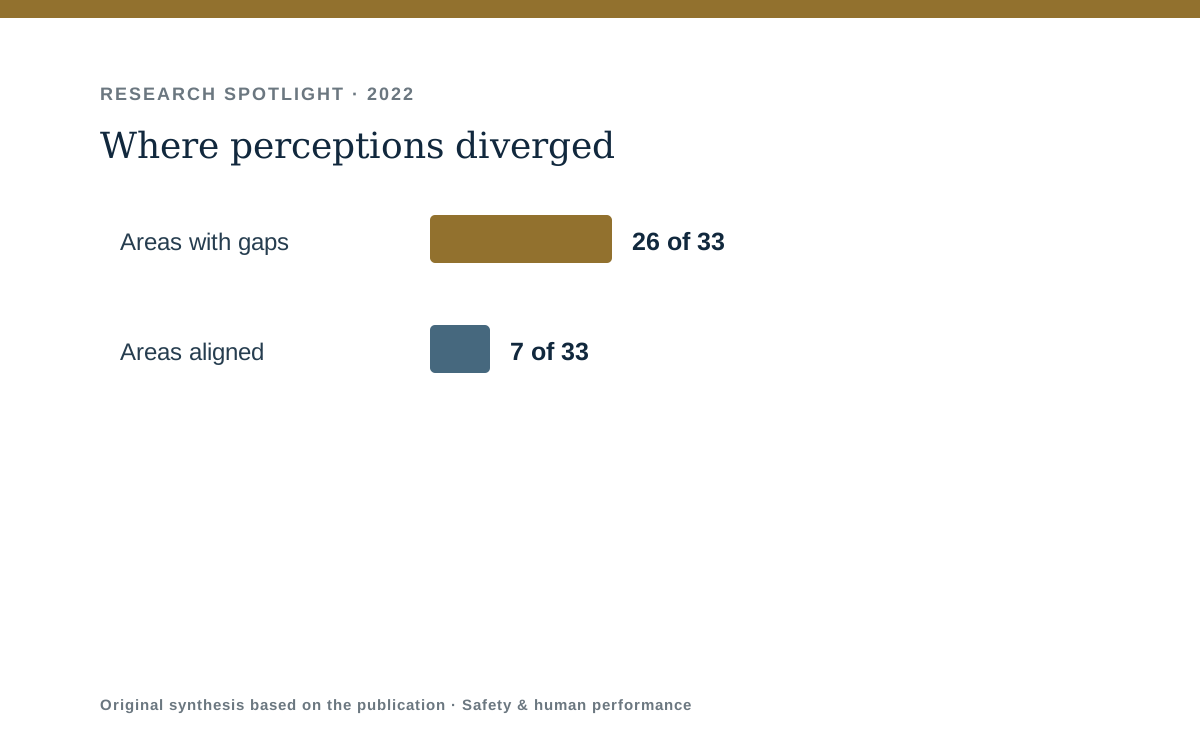
Where perceptions diverged. This original synthesis graphic is based on the study’s documented question, method, or principal contribution; consult the paper for complete figures, labels, units, and uncertainty.
Original website synthesis based on the cited publication.
View full-size figure ↗READ THE PAPER
Published · 2022 · Journal article
Namian, M., Tafazzoli, M., Al-Bayati, A. J., & Kermanshachi, S. (2022). Are construction managers from Mars and workers from Venus? Exploring differences in construction safety perception of two key field stakeholders. International Journal of Environmental Research and Public Health, 19(10), 6172. https://doi.org/10.3390/ijerph19106172
CONTINUE EXPLORING
The results show that technical capability alone is not enough.
Safety & human performance
Read spotlightThe multidimensional readiness framework helps researchers and safety teams evaluate whether a garment can survive real work, fit workflows, protect worker interests, and produce information that can support decisions.
Safety & human performance
Read spotlightFor researchers, the work provides a documented basis for the next study of safety & human performance.
Safety & human performance
Read spotlight